
Jersey Design
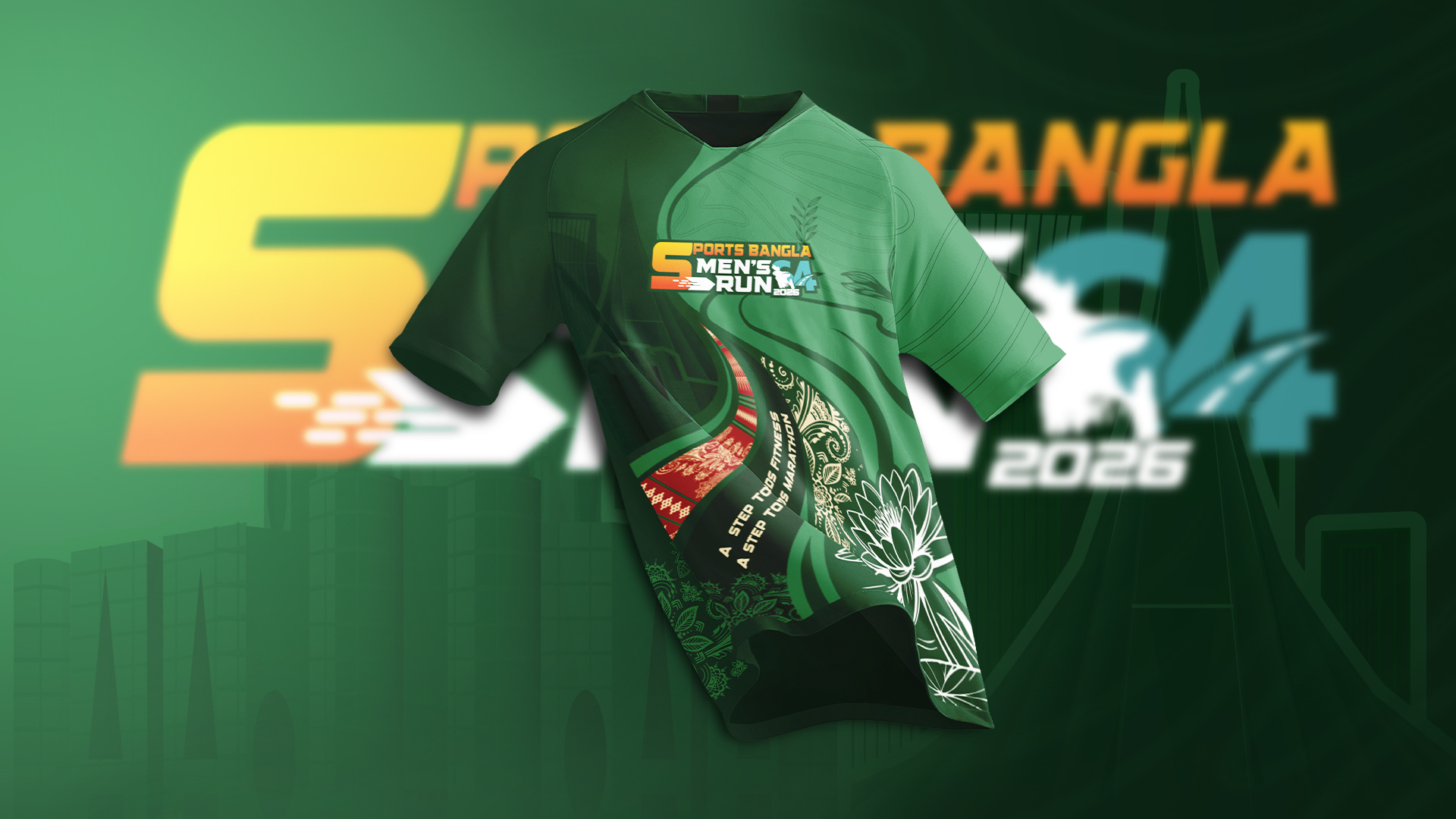
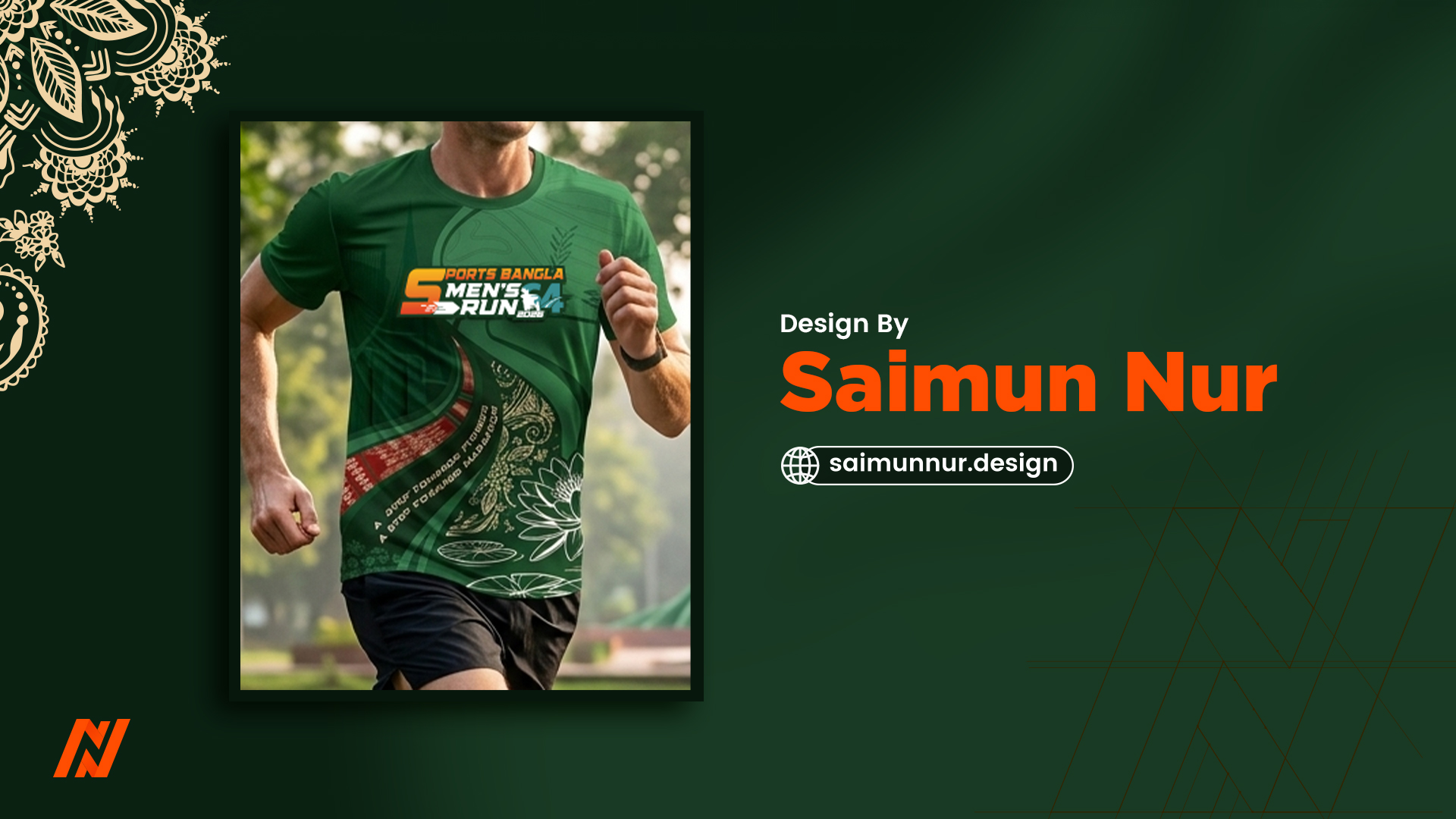
This performance kit, which represents the whole nation. synthesizes the architectural resilience and organic cultural rhythm of Bangladesh into a single, cohesive narrative. The design weaves together the flow of the nation’s river systems with iconic monuments and traditional Nakshi Kantha motifs to celebrate a heritage of national pride and constant motion.
- Client: Sports Bangla
- Year: 2026
- Role: Creative Head
- Tools: Adobe Illustrator
- Location: Dhaka, Bangladesh
Quick Links
Process
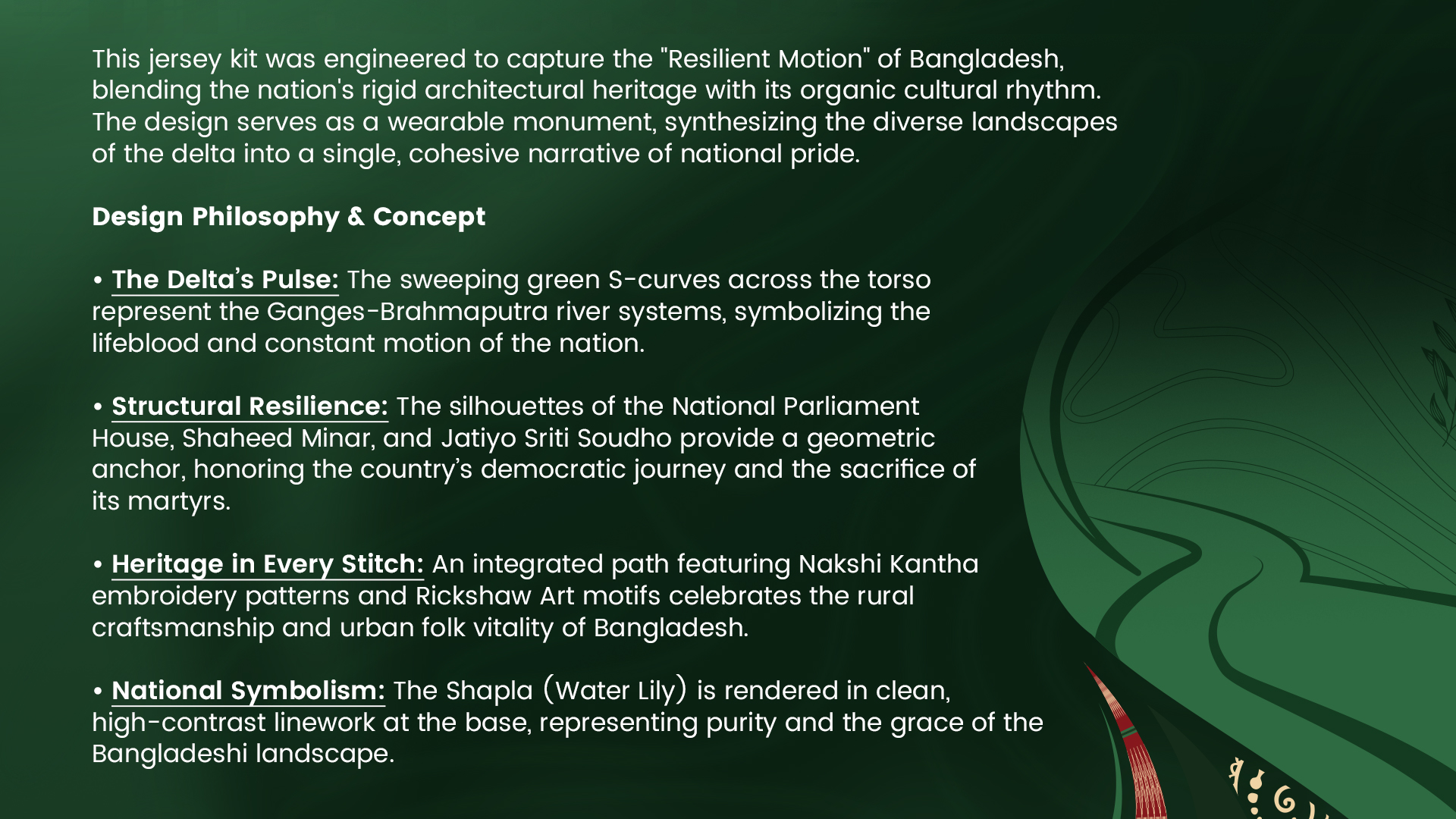
This design is a sophisticated visual synthesis of Bangladesh, moving beyond simple imagery to create a “wearable narrative” of the nation. By layering structural landmarks with organic cultural motifs, it captures the duality of Bangladesh: a country of rigid resilience and fluid grace.
Here is a professional analysis of how these specific elements align with the cultural identity of Bangladesh:
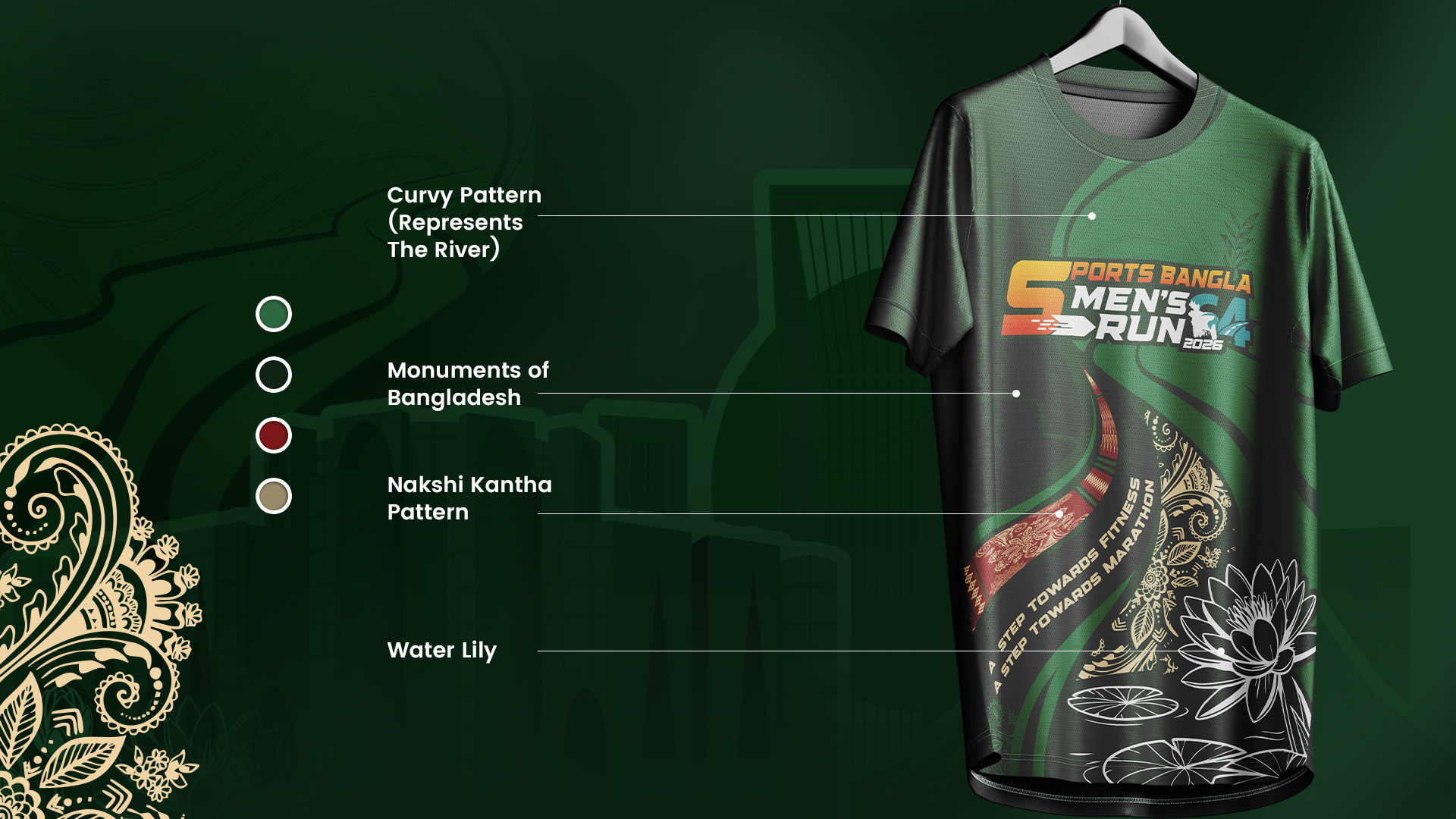
1. The “Nokshi Kantha” Path (Heritage & Resilience)
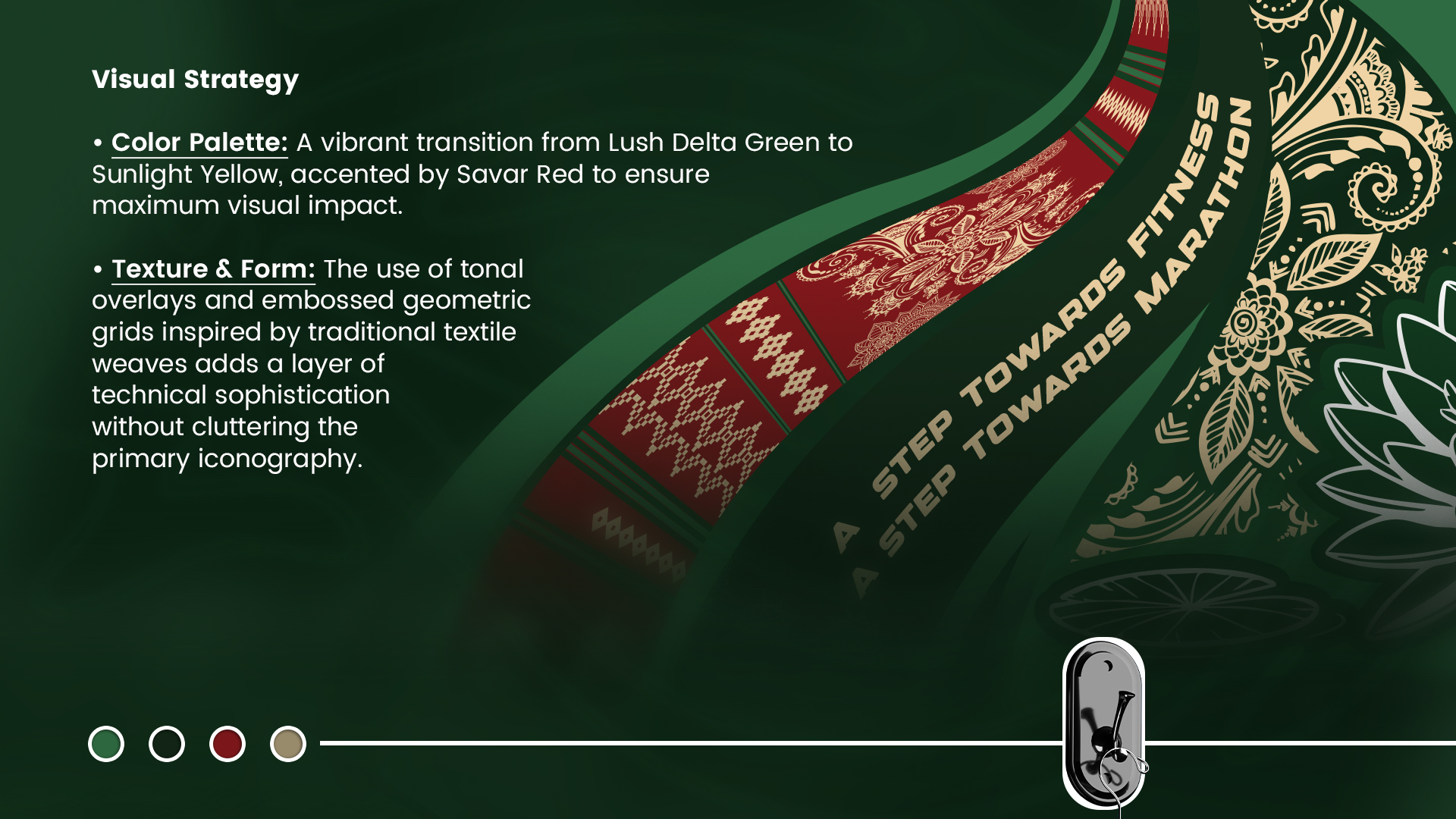
- Symbolism: The red pattern acts as a literal and metaphorical “thread” connecting the design. By using Nokshi Kantha motifs—traditional embroidered quilts—the design honors the rural artistry and storytelling heritage of Bangladeshi women.
- Cultural Alignment: In a marathon context, this “embroidered path” represents the fabric of the nation, suggesting that every step taken by the runner is supported by centuries of craftsmanship and shared history.
2. The Riverine Curves (The Delta’s Pulse)
- Symbolism: The sweeping green curves near the shoulder represent the Ganges-Brahmaputra Delta, the largest in the world.
- Cultural Alignment: Bangladesh is defined by its water. These patterns reflect the “Delta Flow,” symbolizing life, trade, and the constant motion of a people who have learned to live in harmony with the shifting tides of the great rivers. It gives the jersey a sense of “dynamic unification”.
3. The Water Lilies (National Grace)
- Symbolism: Positioned at the base, the Shapla (Water Lily) is more than just a national symbol; it represents purity and the ability to thrive in the water.
- Cultural Alignment: Using clean, white linework for the Shapla provides a high-contrast focal point that represents the simple beauty found across the Bangladeshi landscape, from remote haors to urban ponds.
4. The Monumental Horizon (Structural Pride)
- Symbolism: The silhouettes of the Jatiyo Sangsad Bhaban (Parliament), Jatiyo Sriti Soudho (National Martyrs’ Memorial), and Shaheed Minar (Language Martyrs’ Monument) provide the “architectural geometry” of the design.
- Cultural Alignment:
- Shaheed Minar and Sriti Soudho anchor the design in the struggle for language and independence, turning the jersey into a tribute to national sacrifice.
- The Parliament House silhouette adds a layer of modern structural prestige, reflecting the nation’s democratic journey and architectural world-standing.
5. The “Rickshaw Art” Influence (Urban Vitality)
- Symbolism: Though not explicitly in your hints, the delicate, swirling floral mandalas in the background are classic hallmarks of Rickshaw Art.
- Cultural Alignment: This adds “folk vitality” and urban energy to the jersey. It bridges the gap between the formal structural monuments and the lived, colorful experience of the streets of Dhaka and beyond.
Professional Verdict: By combining these elements, the design achieves a “Unified Narrative”. It doesn’t just show a map; it weaves the struggle (monuments), the land (rivers), the art (Kantha), and the spirit (lilies) into a single, cohesive garment that feels authentically Bangladeshi.
Credits
- Design: Saimun Nur